
Hair Serums for Split Ends: Five Formula Types
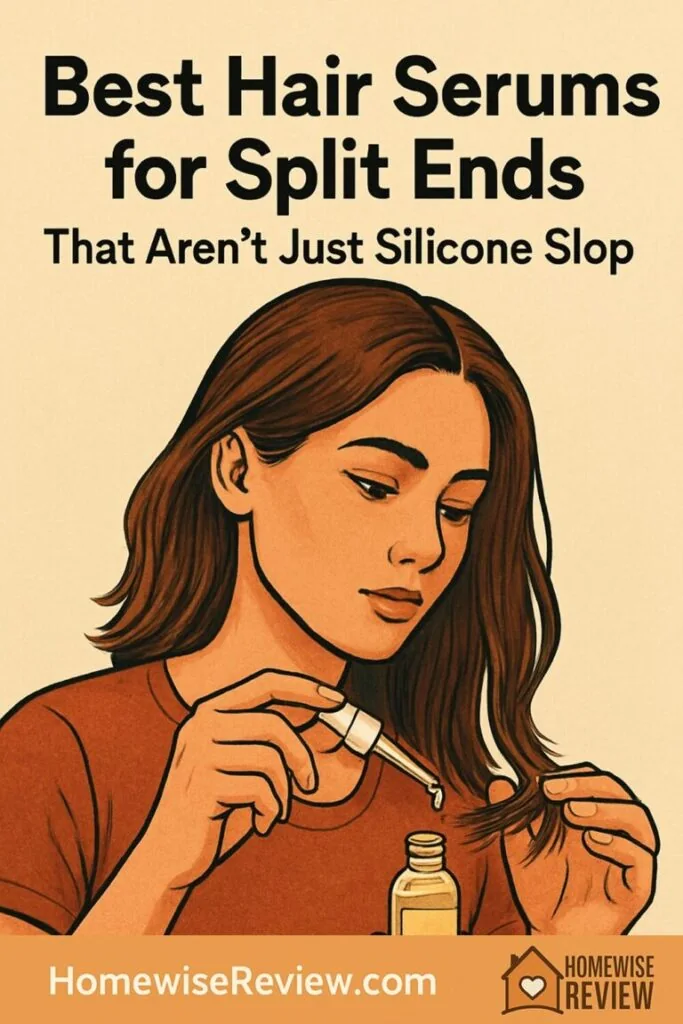
A concentrated oil with brand directions for damp or dry lengths. Start with a few drops; no serum permanently rejoins a split.
We may earn a small referral fee
Looking for a budget alternative? Olaplex No.7 Bonding Oil
Direct answer: a leave-in oil or cream can make frayed ends look smoother and reduce tangling, but it cannot permanently fuse a fiber that has split. Choose among these five products by texture, application directions and heat-styling needs. We checked current manufacturer information and dermatology guidance; we did not test the feel, wear, scent or split-end count on our own hair. Brand percentages and “repair” language are not comparative evidence.
Oil or cream: start with the label
The K18 Molecular Repair Hair Oil is a silicone-free oil whose maker says to start with 1 to 3 drops; the Olaplex No.7 Bonding Oil is a silicone-containing styling oil with a 2 to 3 drop direction. The Pureology Strength Cure Split End Salve is a cream salve for towel-dried ends, a different texture decision. These shopping searches can lead to multiple listings, so verify the exact product. A visible split still needs a trim if you want the damaged tip removed.
Quick picks by use and texture
- K18 Molecular Repair Hair Oil: concentrated silicone-free oil; brand directs 1 to 3 drops and a four-minute wait before styling for its peptide claim.
- Olaplex No.7 Bonding Oil: silicone-containing styling oil; brand directs 2 to 3 drops on damp or dry hair and describes heat protection.
- Pureology Strength Cure Split End Salve: cream salve for ends; Pureology’s regional instructions specify a small amount on towel-dried hair.
- Kérastase Resistance Serum Thérapiste: cream-serum for over-processed lengths; Kérastase directs 1 to 2 pumps on towel-dried mid-lengths and ends.
- Amika The Closer Instant Repair Cream: leave-in cream for the look of split ends; Amika directs a dime-sized start on damp or dry lengths and a separate heat protectant before hot tools.
These are reasons to investigate each product, not tested “best overall” or comparative weight rankings. A concentrated oil, silicone oil and cream can feel different depending on your strand diameter, length and amount used. Start with the maker’s smaller suggested amount, then adjust only if needed.
K18 Molecular Repair Hair Oil
Consider if: You want an oil finish and are willing to follow an unusually specific timing direction. K18 says to use 1 to 3 drops on towel-dried mid-lengths and ends, wait four minutes before styling for its peptide-related strengthening claim, or use it on dry hair as a finisher. The official product page calls the oil silicone-free and lists hemisqualane, squalane and plant oils.
Limit: K18 advertises a reduction in visible split ends and heat protection, but those are manufacturer results with its methods, not evidence that this bottle permanently closes every split or outperforms the four others here. A tiny amount may be enough; finish and feel will vary with hair and dose. We have not independently tested either.
Olaplex No.7 Bonding Oil
Consider if: You want a silicone-containing oil for shine and styling. Olaplex directs 2 to 3 drops on damp or dry hair and says it may be used before or after styling. Its page expressly confirms that the formula contains silicones and advertises heat protection up to 450°F/232°C.
Limit: “Weightless” and long frizz-control figures on the brand page are its claims, not a guarantee for your hair or proof that this oil is glossier than K18. If silicone feel matters to you, ingredient transparency is a more useful distinction than the idea that all silicones are bad or that this product repairs an already split tip.
Pureology Strength Cure Split End Salve
Consider if: You prefer a cream to a dropper oil, particularly on color-treated lengths. Pureology’s Australia and New Zealand product page describes a salve for split-end appearance and directs a small amount rubbed between palms onto towel-dried ends. Its formula and regional availability should be checked against the exact listing you intend to buy.
Limit: Pureology uses “seal” and “repair” language, but that does not mean a split is permanently restored. Texture, scent and layering performance were not independently tested. A cream may suit someone who finds oils too slick, but that is a personal texture decision.
Kérastase Résistance Sérum Thérapiste
Consider if: Your lengths are over-processed and you want a leave-in cream-serum for blow-drying. The U.S. brand page directs 1 to 2 pumps on towel-dried mid-lengths and ends, then styling. It also advertises heat protection; follow the exact label and your tool’s instructions.
Limit: We did not verify that it is heavier, more cushioning or better on coarse hair than the others. Start with the stated amount and assess residue on your own hair. A heat-protection claim does not make daily high-heat styling harmless.
Amika The Closer Instant Repair Cream
Consider if: You want a cream that the maker says temporarily improves the look of split ends. Amika directs a dime-sized starting amount on damp or dry mid-lengths to ends, before other styling products. Its product page recommends applying a separate heat protectant after The Closer if you will use hot tools.
Limit: Amika’s “96% of split ends” result is the brand’s clinical claim under its conditions, not a 96% permanent repair rate or a comparison with these four products. The exact amount and finish that suit you require your own trial; HomeWise has not tested the cream.
Choose and use a serum without mistaking gloss for repair
- Identify the real problem. If the end is already forked, product can change appearance and handling; a trim removes the damaged tip. If breakage is spreading along the length, review chemical services, brushing and heat as well as product choice.
- Match texture and directions. An oil may be easy to dose in drops; a cream can be spread across more lengths. Follow the exact product’s damp/dry direction and begin with its smallest useful amount.
- Check heat protection separately. K18, Olaplex and Kérastase publish heat-protection claims. Amika tells users to add a heat protectant before hot tools. Do not infer the same protection for Pureology’s salve from its “repair” name.
- Reduce the cause of new damage. The American Academy of Dermatology advises conditioning after shampoo and using a leave-in or detangler to reduce breakage and split ends. It also advises gentle handling of wet hair, with different advice for tightly curled or textured hair, and limiting damaging heat and brushing habits.
Our breakage and split-end care guide helps with the routine. See shampoos for damaged hair and hair masks for separate wash-day choices. Our fine-hair heat-protectant guide and protein-treatment guide address other product decisions; none can permanently weld a visibly split tip.
Frequently Asked Questions
Can any of these permanently fix a split end?
No permanent reconnection is established for a tip that has visibly forked. Products may smooth the appearance and help reduce friction; a trim removes the damaged portion. Treat percentage claims as brand-specific cosmetic results unless an independent method is available.
Should I put the serum on damp or dry hair?
Follow the exact label. K18 and Olaplex allow damp or dry use, Kérastase directs towel-dried lengths, Pureology’s cited regional page directs towel-dried ends, and Amika allows damp or dry use. Start small.
Can I layer these before heat styling?
Follow the product order from the maker and confirm your heat protection. Amika specifically says to add a separate protectant after its cream. Avoid assuming multiple branded heat claims add together or make repeated hot-tool passes safe.
Sources and limits
Checked September 23, 2026: K18 Molecular Repair Hair Oil, Olaplex No.7, Pureology Split End Salve (Australia/New Zealand), Kérastase Sérum Thérapiste, Amika The Closer, and American Academy of Dermatology styling guidance. Product formulas, regions and availability may change. We did not perform hands-on or comparative testing, and manufacturer repair and heat claims are not independently validated here.
As an Amazon Associate, we earn from qualifying purchases made through links on our site.