
Medium-Length Haircuts for Mature Women: Choose by Hair and Routine
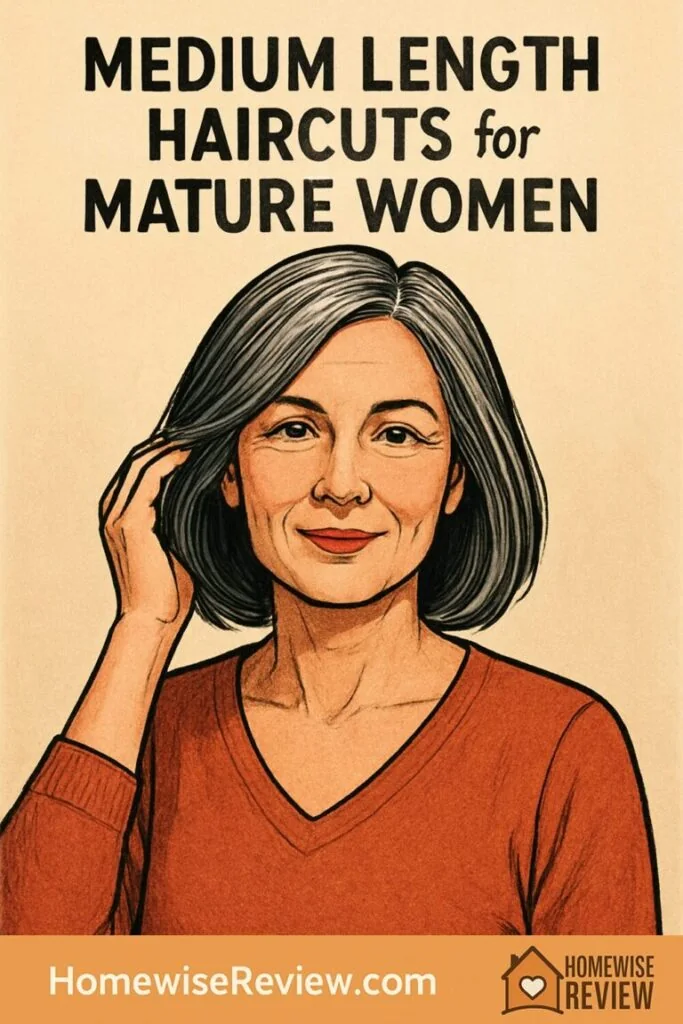
Choose a shoulder-to-collarbone cut by your hair texture, the fullness you want at the ends, and the time you will spend styling. Bring those priorities to your stylist instead of relying on age or face-shape rules.
A useful medium-length haircut starts with four choices: where you want the ends to fall, how much weight to keep at the perimeter, whether you need the hair to tie back, and how you normally style it. Age alone cannot choose a cut for you. If your hair has changed, describe the change to your stylist rather than assuming every woman over 50 needs layers or bangs. The shapes below are options to discuss, not tested promises of a younger look or a cure for thinning.
Decide what the cut must do before choosing a photo
“Medium length” can mean a shoulder-skimming bob or hair that falls below the collarbone. On curly or coily hair, the dry finished length may differ substantially from the wet length. Show your stylist the point where you want the ends to sit when you wear your hair as usual. If a ponytail matters, ask whether the shortest front pieces will stay in it.
- Fullness at the ends: If your ends look sparse to you, ask to see a shape with more weight kept at the bottom before agreeing to extensive layers. A cut can change the outline, but it cannot increase the number of hairs growing from your scalp.
- Natural texture: Bring a photo of your hair on an ordinary day as well as an inspiration photo. Explain whether you air-dry, diffuse, blow-dry, straighten, or wear a protective style.
- Time and upkeep: A fringe or short face-framing pieces may need more daily attention than a one-length edge. Ask your stylist to show how the cut grows out and to suggest a trim interval for your actual hair and shape.
- Comfort and access: Mention scalp sensitivity, trouble reaching the back of your head, or a need for easy tie-back. Those practical limits matter more than a rule about face shape.
Compare four medium-length shapes
| Shape | What to ask about | Main tradeoff |
|---|---|---|
| Collarbone lob | A defined lower edge with subtle movement; confirm whether it can be tied back | A clean outline may need regular shaping if you want to keep that precise line |
| Shoulder cut with face-framing pieces | Keep the back full and choose the shortest front length you can manage | Short front pieces can escape a ponytail and may need styling |
| Textured, layered cut | Ask where the shortest layers start and how the ends will look without styling | More layers can remove weight from ends you wanted to keep full |
| Curly or coily shaped cut | Show your usual curl pattern and desired dry length; discuss shrinkage and silhouette | A shape photographed after salon styling may sit differently on your wash day |
These are visual and maintenance choices. There is no reliable rule that a lob suits every face or that a shag conceals every thinning area. Ask the stylist to show where weight will be removed before cutting.
When a collarbone lob makes sense
Start here if you want a clear edge and some flexibility to tuck or tie hair back. If your strands are fine or the ends look thin, discuss keeping enough weight around the bottom. If your hair is dense, ask how the shape will move without removing more weight than you want. The finished edge matters more than the label “lob.”
When face-framing pieces are worth the upkeep
Front pieces can create movement around the face, but the useful question is how short you want them. Point to the place where they should end when dry and ask whether they will stay out of your eyes or fit behind your ear. You can begin with longer pieces and shorten them later; growing out an unexpectedly short fringe takes time.
When to be cautious with many layers
A textured cut can make natural movement visible, especially if you already like a less uniform outline. It also removes weight. Ask for a preview of the shortest layer and how much hair will remain at the perimeter. If you want a dense-looking lower edge, a heavy shag may work against that goal. Styling cream or mousse can change the finish, but a product cannot replace hair removed by a cut.
For curls and coils, plan for the finished dry shape
Discuss the way your curls or coils spring back after washing, where you want volume, and whether you wear them stretched as well as natural. Ask the stylist how they will judge the finished length and shape for your routine. A dry cut is one approach, not a universal requirement. The right method depends on the pattern, the desired shape, and the stylist’s technique.
If you are seeing new thinning, separate styling from diagnosis
A widening part, a noticeably thinner ponytail, or a new area of shedding is a reason to consider medical advice, not just a different haircut. The American Academy of Dermatology notes that hair loss in women has several possible causes and recommends a dermatologist to identify the cause. A cut may change how the outline looks, but it will not diagnose or treat hair loss. Do not let a promise that layers will “hide thinning” delay assessment of a change that concerns you.
If your goal is simply to keep the ends looking substantial, tell the stylist that directly. A side part, fringe, or root product is optional styling, not a treatment or a guaranteed disguise.
Protect the hair you want to keep
The American Academy of Dermatology warns that excessive heat and repeated tension can damage hair. If you blow-dry or use a flat iron, ask your stylist to show a version of the cut that works with less heat on ordinary days. AAD advises low or medium heat for flat irons on dry hair and reducing blow-dryer frequency when possible. For tightly curled or textured hair, its wet-detangling advice differs from its general advice to handle wet hair minimally, so follow care that fits your texture.
A style should not feel painfully tight. Repeated pulling from tight ponytails, braids, or extensions can contribute to traction hair loss. If you need to secure medium hair for work, discuss a looser option that meets that need.
If your question is styling rather than the cut, compare our volumizing product guide for fine hair. A product may change the finish; it does not address the cause of new thinning.
Take this brief to the salon
- Finished length: “I want the ends to sit here when my hair is dry and worn normally.” Show the point on your shoulder or collarbone.
- Priority: “I care most about keeping fullness at the ends,” or “I want more movement even if the ends look lighter.”
- Real routine: State how you wash, dry, and style on an ordinary day and how much time you will spend.
- Front pieces and tie-back: Show the shortest front length you would accept and whether it must stay in a ponytail or behind an ear.
- Maintenance: Ask what will change as the cut grows and when this particular shape would need a refresh.
Bring one photo for the silhouette and one for the front length, then identify the feature you like in each. A photo is a discussion aid; your hair texture, density, and routine determine how the result will behave.
Related HomeWise guides
If styling tools are part of your plan, compare the limits of hair straighteners before buying one. For a routine that uses fewer steps, see simpler styling tools. If you are choosing care for dry-feeling lengths, our conditioner guide covers that separate product decision. A brush guide for straight hair can help with tool choice if that is how you style. None of those products can change the underlying cause of hair loss.
Frequently Asked Questions
Is shoulder length always flattering after 50?
No cut works the same way on everyone. Choose the finished length, edge, and amount of layering by the hair you have and the routine you want. Age is not a measurement of hair density or texture.
Should I ask for layers if my hair looks thinner?
Ask what the layers will remove and how full the ends will look. If thinning is new or progressing, consider a dermatologist as well; a haircut changes shape but does not treat the cause.
How often does a medium cut need trimming?
There is no universal six-week rule. Fringe, a precise edge, curl shape, growth rate, and your tolerance for grow-out all affect timing. Ask your stylist for a plan based on the cut you choose.
Sources and limits
The American Academy of Dermatology’s styling guidance supports the heat and handling cautions. Its hair-loss guidance explains why a widening part or thinner ponytail merits assessment; its traction guidance covers repeated pulling. Haircut shapes and salon questions here are practical editorial options, not results of a controlled test or claims that a cut reverses aging or hair loss.
As an Amazon Associate, we earn from qualifying purchases made through links on our site.