
Sleeping Masks and Pillow Residue: Formula and Routine Checks
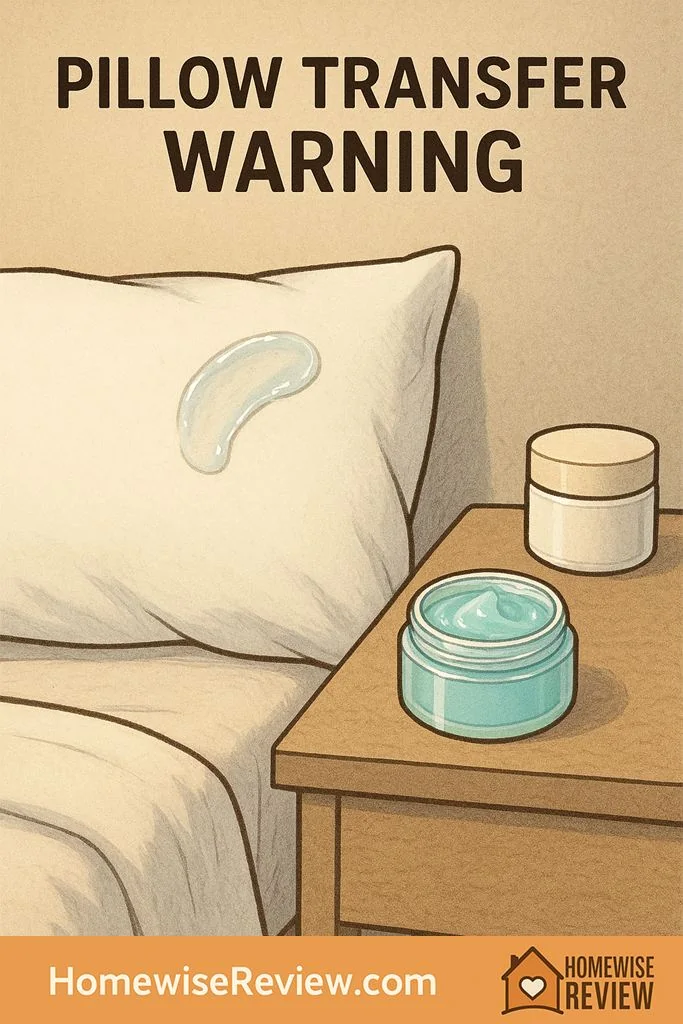
Compare exact overnight-product instructions and distinguish skin finish, new fabric marks and routine preference. A night cream is not established to transfer less, and a pillow mark cannot measure lost treatment.
A mark on a pillowcase does not tell you how much skincare left your face or which layer made the mark. Before replacing a sleeping mask, separate the questions: did you dislike the finish before bed, notice a new mark the next morning, or simply prefer a shorter evening routine?
The four named candidates below have different manufacturer instructions. This guide uses those instructions to help you choose and document a routine. It supplies no personal wear test, measured transfer comparison or systematic count of pillow-transfer complaints. AI assisted the research and writing.
Compare the documented routine
Check the complete name and current package. A sleeping mask can be an extra step after cream or serve as the moisturizing step itself. Category names do not establish how much product will reach fabric.
| Product | Identity check | Instruction boundary |
|---|---|---|
| Laneige Water Sleeping Mask | Current upgraded US gel offering | Evenly after face cream, overnight, rinse in morning |
| Glow Recipe Watermelon Glow AHA Night Treatment | Night Treatment differs from OG Sleeping Mask | Generous final step, pat until absorbed; brand no-stain claim not independently tested |
| Fresh Black Tea Firming Overnight Mask | Current US H00007018 offering | Generous face/neck layer; FAQ says separate moisturizer not needed |
The table compares instructions rather than transfer resistance. A rinse-off direction for the following morning does not prove that the formula stays wet overnight, and a night-cream label does not establish less pillow residue.
Laneige Water Sleeping Mask: check the current version
Laneige Water Sleeping Mask is described on the current US Laneige product page as a lightweight gel formula. Its directions place it after face cream, spread evenly across the face, left on overnight and rinsed off in the morning. The page identifies an upgraded formula with a three-type hyaluronic-acid blend.
Record the version on your jar instead of importing observations from an older formula, Cica Sleeping Mask or Bouncy & Firm. A manufacturer’s lightweight description does not establish a measured drying time or lower fabric transfer.
For an existing routine, the useful question is whether you want the additional step after cream. Write down both products rather than attributing the morning result to the mask alone. That does not establish that the two layers are incompatible; it simply keeps the actual routine visible.
Glow Recipe: distinguish the treatment from the original mask
Glow Recipe Watermelon Glow AHA Night Treatment is distinct from the original Watermelon Glow Sleeping Mask. On its current treatment page, Glow Recipe describes a new formula and directs a generous amount as the final evening step, gently patted until absorbed, with morning cleansing. It lists use two or three times weekly or as needed.
The page explicitly says the treatment will not stain a pillow and describes absorption during dry-down. Those are manufacturer claims, not a fabric comparison performed for this guide. They also answer a staining question; they do not provide a measured percentage of product remaining on skin overnight.
Keep exfoliating-treatment instructions separate from bedding preferences. Read the exact label’s use and routine cautions rather than treating the treatment as an interchangeable plain moisturizer. No conclusion about acid movement onto pillows or the eye area is established by a glossy appearance alone.
Fresh Black Tea: match the jar to the current offering
Fresh Black Tea Firming Overnight Mask has a current US brand offering whose directions specify massaging a generous layer onto face and neck after cleansing, leaving it overnight and using it as the final skincare step. The FAQ says another moisturizer is not needed and recommends rinsing in the morning.
This named current offering should not be treated as proof that every older jar has the same formula. Check the package you own. Its generous-layer instruction also differs from CeraVe’s small-dot method; do not replace either with a universal quantity inferred from the word mask.
Fresh’s moisturizing and firming positioning does not establish more residue for side sleepers or warm sleepers. Neither plush marketing language nor a high price provides that comparison. Decide whether its documented routine fits your preferences, then distinguish those preferences from an observed fabric mark.
CeraVe Skin Renewing Night Cream: an alternative routine, not a proven winner
CeraVe Skin Renewing Night Cream is a candidate for someone seeking a night moisturizer. CeraVe’s instructions specify small dots where needed around the face, gently smoothed until thoroughly absorbed, for nightly use before bedtime. The brand describes the cream as non-greasy.
That description does not establish a transfer-proof finish on your pillowcase. There is no comparative test here showing that this cream leaves less residue than Laneige, Glow Recipe or Fresh. Its named application method can help you evaluate a different routine without a promised bedding outcome.
If you want a single moisturizing step, check whether your selected formula’s directions support that role. Choosing a simpler routine is a preference you can assess directly; it does not require claiming that all sleeping masks remain as slippery topcoats.
Keep skin finish, fabric marks and routine preference separate
Use three questions to define the problem before shopping. They point to different evidence and should not be collapsed into one verdict about a formula.
- Finish before bed: did you dislike the feel or visible sheen after application? Record that preference without assuming it predicts a pillow mark.
- Fabric appearance: was there a new mark on a pillowcase whose condition you knew before use? Describe the mark and location without identifying its contents from sight.
- Routine burden: do you want fewer evening steps or dislike morning rinsing? Compare the documented routine rather than assuming that a cream guarantees less transfer.
A mark can have more than one possible source in a full routine. Include any other leave-on skincare, makeup remaining from the day, hair products near the contact area and the pillowcase’s starting condition in your notes. Their presence does not prove which item caused the mark.
Do not estimate lost hydration or treatment strength by a mark’s size or color. A visible fabric observation is not a measurement of how much of a particular ingredient moved or how well the skincare performed.
A practical observation sheet
Record six details: exact product versions; the other products used; amounts and application movements; approximate application-to-bed interval; fabric type and starting condition; and the new appearance you noticed. The interval is context, not a prescribed waiting time.
If you take photographs, keep the light and framing consistent and include a before-use view of the fabric. A fresh pillowcase and an already marked one do not make a meaningful visual comparison. Avoid presenting a photograph as chemical identification or a controlled test.
When trying a routine change, alter one optional factor at a time where practical. Replacing the mask, changing the pillowcase and removing other products on the same night makes it harder to understand which change mattered. Record a result as specific to that routine rather than a universal product ranking.
Read directions before changing quantity or timing
These manufacturers use different amount descriptions and movements. Generous, evenly spread and small dots are not interchangeable measured doses. Use the exact current package instructions instead of prescribing one pea-sized amount for every overnight product.
No universal thirty- or sixty-minute pre-bed interval is established here. An observed difference after applying earlier may be useful to you, but it does not demonstrate a measured absorption time for the entire category. Manufacturer absorption wording should not be converted into a stopwatch guarantee.
If an exfoliating formula has routine restrictions, keep those instructions ahead of a cosmetic bedding preference. An unverified no-transfer claim should not determine how you combine treatments.
Choose for the question you can answer
CeraVe Skin Renewing Night Cream offers a documented night-cream routine; it is not demonstrated to leave less pillow residue than the three masks. Choose an exact product and method you want to use, then assess its feel and the actual fabric observation separately.
Amazon links open product-name searches. Verify the version, size, seller and current package before buying. A search result does not guarantee the current formula, stock, authenticity or a matched item, and no current price is supplied.
Related evening-routine reading
These guides address adjacent routine and cleanser choices. They do not establish a transfer ranking for the four products here, and a cruelty-free category is not a finish measurement.
- Evening-routine selection guide
- Oil, balm, milk and gel cleanser guide
- Drugstore micellar-water selection guide
- Cruelty-free night-cream selection guide
- Olay Regenerist Retinol 24 night moisturizer review
Frequently Asked Questions
Does a gel sleeping mask necessarily transfer more than cream?
No comparative fabric test is presented here. Texture descriptions help describe a product, but do not establish a category-wide transfer ranking.
Does a pillow mark show that my treatment stopped working?
A visible mark does not measure the amount or identity of material transferred, or establish the treatment’s performance. Keep the fabric observation separate from that conclusion.
Is CeraVe proven to leave less pillow residue?
No. Its instructions support evaluating a different nighttime routine, but no lower-transfer advantage against these masks is demonstrated.
Should I use every sleeping mask after moisturizer?
Check the exact directions. These products have different routine roles, so applying them all as another layer after cream can miss the manufacturer’s intended method.
As an Amazon Associate, we earn from qualifying purchases made through links on our site.